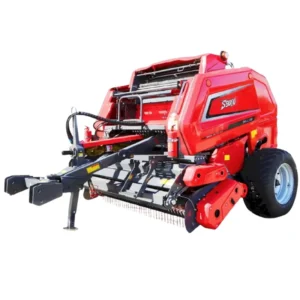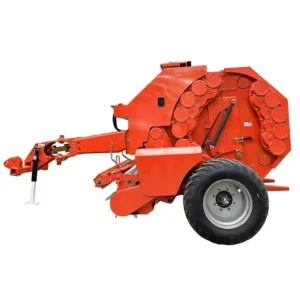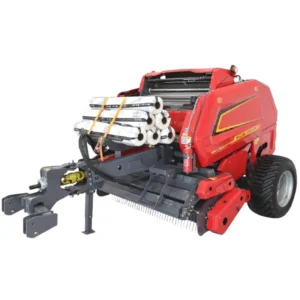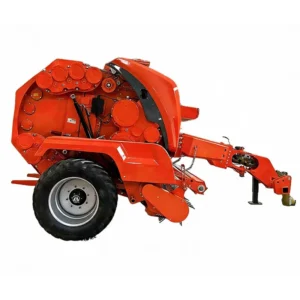
9YCM-850 Baler-Wrapper Combination
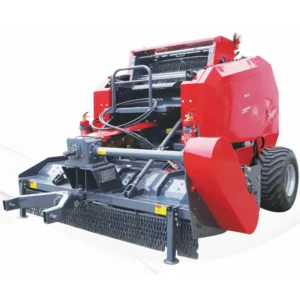
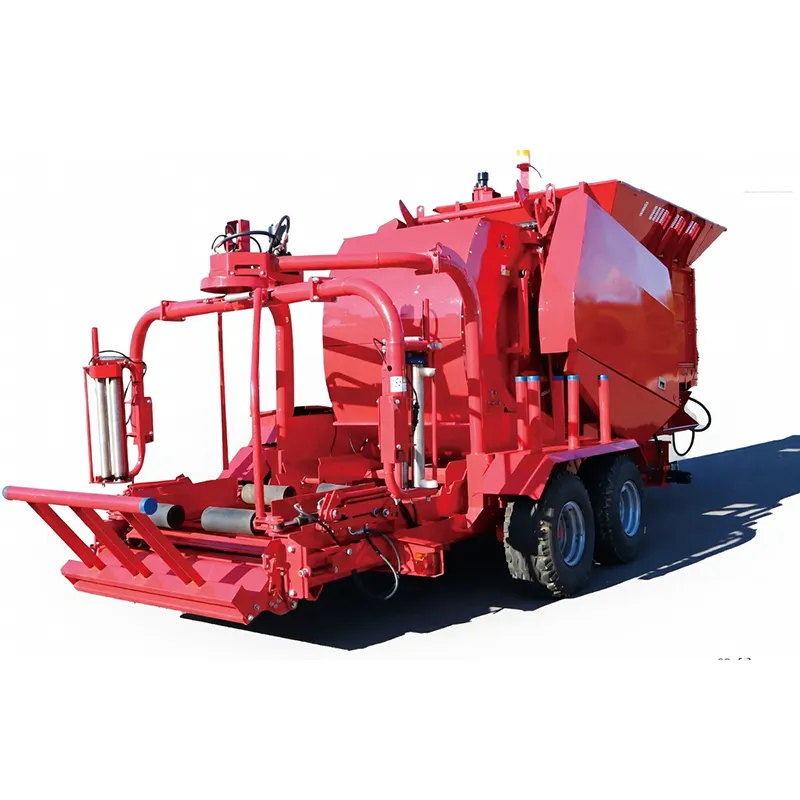
9YCM-850 Baler Wrapper Combination: hopper-fed machine for pre-chopped silage materials (corn stalks, alfalfa, grass). Forms 0.48–0.54 m³ round bales (Ø85–90 × 85 cm), auto-transfers to wrapping table for 4–6 film layers. Productivity 30–40 bales/hour; requires tractor ≥120 HP, PTO 540 rpm.
9YCM-850 Baler-Wrapper Combination – High-Efficiency Silage Baling & Wrapping Solution
The 9YCM-850 Baler-Wrapper Combination is an advanced all-in-one agricultural machine engineered to streamline the baling and wrapping process into a single, continuous operation. Designed for modern livestock farms, silage contractors, and large-scale agricultural enterprises, this machine compresses freshly harvested forage crops — including corn stalks, alfalfa, grass, and other silage materials — into tightly formed round bales and immediately wraps them with stretch film to create an anaerobic environment essential for high-quality fermentation. As a premium round baler wrapper combination for sale, the 9YCM-850 eliminates the need for separate baling and wrapping equipment, dramatically reducing labor costs, field time, and machinery investment. Built on years of R&D expertise from Brazil Agricultural Balers Co., Ltd., this model represents the pinnacle of integrated baler-wrapper technology, delivering consistent bale density, reliable wrapping coverage, and exceptional throughput of 30–40 bales per hour under standard operating conditions.
⚙ Technical Specifications
9YCM-850 Baler-Wrapper Combination – Full Parameters
★ Key Advantages of the 9YCM-850
All-in-One Integration
The 9YCM-850 combines baling and wrapping into one seamless machine, eliminating the need for purchasing, maintaining, and transporting two separate pieces of equipment. This integrated design reduces capital expenditure, simplifies logistics, and minimizes the risk of bale quality degradation between processes — a key reason it serves as a dependable replacement of New Holland baler wrapper combination for cost-conscious operators.
High Throughput
With a productivity rate of 30–40 bales per hour, the 9YCM-850 ensures that large volumes of forage can be processed within tight harvest windows. This high output capability is particularly critical during the silage season when weather conditions demand rapid field operations and any delay can compromise crop nutritional quality.
Heavy-Duty Build Quality
Constructed with reinforced steel frames, industrial-grade bearings, and precision-machined components, the 9YCM-850 is built to withstand the rigors of continuous commercial operation. The robust chassis and corrosion-resistant coatings ensure long service life even in humid or tropical environments, reducing downtime and long-term maintenance costs.
Electronic Control System
The intelligent electronic control panel allows the operator to monitor bale formation, wrapping layer count, and system diagnostics in real time from the tractor cab. Automated alerts for net-wrap depletion, film breakage, and hydraulic pressure anomalies enable swift intervention, keeping the workflow running smoothly and efficiently.
Superior Silage Quality
The tight, uniform wrapping applied by the 9YCM-850 creates an airtight seal around each bale, promoting anaerobic lactic acid fermentation. This results in silage with higher nutritional retention, lower dry matter losses, and minimal mold contamination compared to traditional bunker silo methods — a vital advantage as a variable baler wrapper combination corn silage solution.
Cost-Effective Operation
By consolidating two machines into one, the 9YCM-850 cuts fuel consumption, reduces labor from two operators to one, and lowers annual maintenance expenses. The standard 540 rpm PTO and 12V DC electrical system ensure compatibility with a wide range of tractors, avoiding costly powertrain modifications while maximizing return on investment.
🔄 How the 9YCM-850 Works
Stage 1: Material Feeding
The process begins when chopped or harvested forage material — such as corn stalks, grass, alfalfa, or other silage crops — is loaded into the large 2.5 m³ hopper via a forage harvester or loader. The hopper features a conveyor feeding mechanism that meters material evenly into the baling chamber, preventing blockages and ensuring consistent bale density from the very first rotation.
Stage 2: Compression & Bale Formation
Inside the baling chamber, a series of synchronized rollers and belts compress the incoming material under hydraulic pressure. As the chamber fills, the material is continuously rotated and compacted until it reaches the target diameter of 85–90 cm. The electronic control system monitors internal pressure sensors and automatically signals when optimal bale density has been achieved, triggering the net-wrap binding sequence to secure the bale shape.
Stage 3: Automatic Transfer
Once the bale is bound with netting, the baling chamber's rear gate opens hydraulically, and a mechanical arm transfers the formed bale directly onto the integrated wrapping turntable. This fully automated handoff eliminates manual handling, prevents bale damage, and maintains a continuous workflow — a significant productivity advantage over standalone systems.
Stage 4: Film Wrapping & Discharge
The wrapping turntable rotates the bale while a pre-stretch film dispenser applies multiple layers of UV-resistant polyethylene stretch film. Operators can adjust the number of wrapping layers (typically 4–6) through the control panel to suit different crop moisture levels and storage durations. After wrapping is complete, the finished bale is gently tilted and discharged onto the ground, ready for transport or field-side storage. The entire cycle — from feeding to wrapped bale on the ground — takes approximately 90 to 120 seconds.
🔍 How to Choose the Right Baler-Wrapper Combination
1. Assess Your Crop Type
Determine whether you primarily bale dry hay, haylage, or high-moisture silage (such as corn or grass silage). Machines like the 9YCM-850 are optimized for wet, chopped material, while some models are better suited for dry hay only.
2. Match Tractor Power
The 9YCM-850 requires a tractor with a minimum of 120 HP and standard 540 rpm PTO. Ensure your existing tractor meets the hydraulic output requirements (1×1/2 in, 1×3/4 in) before purchasing to avoid compatibility issues.
3. Evaluate Daily Volume
Calculate your daily baling requirement. At 30–40 bales per hour, the 9YCM-850 can produce 240–320 bales in an 8-hour shift, suitable for medium to large operations. Smaller farms may consider compact models.
4. Consider After-Sales Support
Reliable spare parts supply and local service networks are essential. Brazil Agricultural Balers Co., Ltd. provides localized support across major cities including São Paulo, Rio de Janeiro, and Salvador, ensuring minimal downtime during critical seasons.
5. Compare Total Cost of Ownership
Look beyond the purchase price. Factor in fuel efficiency, maintenance frequency, operator training requirements, and wrap film consumption. An integrated machine like the 9YCM-850 typically delivers 20–35% lower total cost compared to running separate baler and wrapper units.
6. Check Build Quality & Warranty
Inspect the frame construction, bearing ratings, and coating quality. The 9YCM-850 features reinforced steel construction and electrostatic-sprayed finish for superior corrosion resistance. Always confirm warranty coverage and terms before finalizing your purchase.
🛠 Operating Procedure
Pre-Operation Check
Inspect all hydraulic connections, PTO shaft coupling, tire pressure, and film roll installation. Verify oil levels and ensure the electronic control panel displays no error codes.
Connect to Tractor
Attach the machine to the tractor's three-point hitch or drawbar. Connect the PTO shaft at 540 rpm, plug in the 12V DC electrical harness, and attach both hydraulic lines securely.
Load Material
Feed chopped silage material into the 2.5 m³ hopper using a forage harvester or front loader. Engage the PTO and begin the feeding conveyor system via the control panel.
Automatic Baling
Monitor bale formation via the electronic control display. The system automatically binds the bale with net wrap when target density is reached and transfers it to the wrapping station.
Wrapping & Discharge
The turntable wraps the bale with stretch film (adjustable 4–6 layers). Once wrapping is complete, the machine tilts and discharges the finished bale onto the ground automatically.
Post-Operation
Disengage PTO, clean residual material from the hopper and chamber, grease all lubrication points, and store the machine on level ground. Record hours of operation for maintenance scheduling.
⚠ Safety Precautions & Maintenance Notes
- ➤ Never approach moving parts while the PTO is engaged. Always shut down and disengage the PTO before performing any maintenance, clearing blockages, or refilling net wrap and film rolls.
- ➤ Wear appropriate PPE including gloves, safety boots, hearing protection, and eye protection at all times during operation. Keep all safety shields and guards in place.
- ➤ Inspect the PTO shaft before each use. Ensure the safety guard is intact and the shaft rotates freely without wobbling. Replace worn universal joints immediately.
- ➤ Check hydraulic hoses and fittings for leaks, cracks, or abrasion before operation. Replace any compromised hydraulic components to prevent sudden pressure loss during bale transfer.
- ➤ Do not exceed the rated tractor speed while operating the baler-wrapper. Maintain a steady, moderate ground speed to ensure uniform bale density and prevent chain or belt slippage.
- ➤ Grease all lubrication points according to the maintenance schedule (typically every 8–10 operating hours). Pay special attention to roller bearings, chain drives, and turntable pivot points.
- ➤ Store the machine under cover during off-season periods. Retract hydraulic cylinders, release belt tension, and apply rust-preventive spray to exposed metal surfaces to extend service life.
- ➤ Keep bystanders and children away from the operational area at all times. Establish a safe perimeter of at least 10 meters around the machine during active baling and wrapping.
📈 Brand Comparison
How the 9YCM-850 stacks up against well-known competitors
Note: Competitor specifications are approximate and sourced from publicly available data. Contact us for a detailed comparison tailored to your operation.
🔧 Related Products: Gearbox & PTO Shaft
To ensure your 9YCM-850 operates at peak performance, we recommend the following compatible components:
🌎 Customer Reviews from Around the World
Ricardo M.
🇧🇷 São Paulo, Brazil – Dairy Farm Owner
★★★★☆
We purchased the 9YCM-850 at the beginning of the 2024 silage season to replace our aging separate baler and wrapper setup. The machine handled our corn silage efficiently, producing around 35 bales per hour on most days. The integrated hopper is a practical feature — it saves time compared to field-pickup models when working with pre-chopped material. The electronic control panel is straightforward and easy to learn. We did experience one hydraulic fitting leak during the first week, but the after-sales team in São Paulo resolved it within 48 hours. For the price point, it offers solid value. Not quite at the level of a premium European machine in terms of finish, but the performance output is comparable and the cost savings are significant.
Alexei K.
🇷🇺 Krasnodar, Russia – Agricultural Contractor
★★★★★
We operate a contracting business serving multiple farms in the Krasnodar region and needed a machine that could work reliably through our intensive two-month silage window. The 9YCM-850 has run for over 600 hours across two seasons so far with no major breakdowns. The bale density is consistent, which our dairy farmer clients appreciate because it translates to better fermentation results. The 540 rpm PTO is a standard match for our fleet of 150 HP tractors. Spare parts ordering has been smooth, with shipments arriving within two weeks to Russia. The build quality is noticeably heavier than some Chinese alternatives we tested previously, and the wrapping tension stays uniform even in hot weather. It is a dependable workhorse.
Bayanbat T.
🇲🇳 Darkhan, Mongolia – Livestock Cooperative Manager
★★★★☆
Feed security is a critical issue for our livestock cooperative during Mongolia's harsh winters. We bought the 9YCM-850 specifically for grass silage preservation. The machine performed well in our relatively short harvest season, and the wrapped bales stored outside for four months without any noticeable mold or spoilage. The electronic controls are simple enough that our operators needed only one day of training. We found the overall dimensions of the machine to be manageable for transport between pasture sites, though the 7-meter length requires a wider turning radius. The customer service team provided clear guidance on film layer recommendations for our cold climate. For the investment, it is a practical solution for cooperatives looking to move beyond traditional pit silage storage.
James O.
🇰🇪 Nakuru, Kenya – Mixed Farm Operator
★★★★☆
Our farm produces both Napier grass and maize for dairy cattle feed. We evaluated several baler-wrapper options from European and Asian manufacturers before choosing the 9YCM-850 based on the combination of features and price. The 2.5 m³ hopper capacity is a clear advantage for us since we use a separate chopper in the field. After 300 hours of operation, the machine has performed reliably with only routine maintenance needed. The bale size is consistent at around 87 cm diameter, which fits well on our transport trailer. One area where it could improve is the operator manual — a more detailed English-language troubleshooting section would be helpful. Overall, the machine delivers what was promised and the cost savings versus European brands have been substantial for our operation.
Murat D.
🇰🇿 Almaty Region, Kazakhstan – Silage Contractor
★★★★★
I run a custom silage contracting operation serving dairy and beef farms across the Almaty region. We upgraded from a standalone McHale wrapper to the 9YCM-850 integrated system, and the productivity gain has been significant. We now complete jobs in roughly 60% of the time it used to take with separate machines and one fewer operator on the crew. The machine's electronic control system is responsive, and the bale transfer from chamber to wrapper is smooth with very few jams — perhaps two or three minor stoppages per 100 bales, which is reasonable. The fuel consumption on our 130 HP tractor has been manageable, and the 295/60-15 tires handle field conditions and road transport adequately. Having a direct communication channel with the manufacturer for technical support has been a real advantage for parts ordering and troubleshooting.
Carlos G.
🇦🇷 Buenos Aires Province, Argentina – Beef Cattle Rancher
★★★★☆
We manage a 2,000-head beef operation and transitioned to bale silage storage from a bunker system to reduce losses and improve feed flexibility across our pastures. We chose the 9YCM-850 after visiting a neighbor who had already been running one for a season. Our experience over eight months has been positive — the machine handles both sorghum and grass silage without issue. The wrapping consistency is good, and we have seen less than 3% spoilage on bales stored for up to five months. The 12V DC electrical system and standard hydraulic fittings made installation straightforward on our Massey Ferguson 7180 tractor. The one limitation I would note is that the fixed bale size (85–90 cm) may not suit operations needing very large bales, but for our cattle feeding program it works efficiently. The price-to-performance ratio is among the best we have evaluated in the South American market.
❓ Frequently Asked Questions
Q1: What types of crops can the 9YCM-850 process?
The 9YCM-850 is designed to handle a wide range of chopped forage materials including corn stalks, alfalfa, grass, clover, sorghum, and other silage crops. It is optimized for pre-chopped material fed into the hopper, making it ideal for silage production. For dry hay baling with field pickup, a different model configuration may be more appropriate.
Q2: What size tractor do I need?
A minimum of 120 HP is required, with a standard 540 rpm PTO output. The tractor must also provide dual hydraulic outputs (1×1/2 in and 1×3/4 in) and a 12V DC electrical connection. Most modern utility and row-crop tractors in the 120–180 HP range are compatible.
Q3: How many bales can it produce per hour?
Under standard operating conditions with continuous material supply, the 9YCM-850 produces 30–40 bales per hour. Actual output depends on crop type, moisture content, and operator efficiency. In a typical 8-hour work day, you can expect 240–320 wrapped bales.
Q4: What are the bale dimensions?
Each bale has a diameter of 85–90 cm and a length of 85 cm, yielding a volume of approximately 0.48–0.54 m³. This standard size is suitable for manual handling with a bale spike or grapple and fits efficiently onto most flatbed trailers for transport.
Q5: How many layers of stretch film are applied?
The wrapping system is adjustable, typically applying 4–6 layers of UV-resistant polyethylene stretch film. For high-moisture silage or extended storage periods (over 6 months), we recommend 6 layers to ensure a fully airtight seal and optimal fermentation conditions.
Q6: Is it available for export outside Brazil?
Yes. Brazil Agricultural Balers Co., Ltd. holds independent import and export rights. We export to countries across South America, Central Asia, Africa, and beyond. Shipping can be arranged via our logistics partners, and we provide export documentation, container loading assistance, and destination port guidance.
Q7: What is the warranty period?
The 9YCM-850 comes with a standard 12-month warranty covering manufacturing defects in major components including the gearbox, hydraulic system, and electronic controls. Extended warranty packages and service contracts are available. Wear parts such as belts, chains, and rollers are covered under separate terms.
Q8: How does it compare to running a separate baler and wrapper?
The integrated design of the 9YCM-850 reduces total equipment cost by approximately 20–35% compared to purchasing a standalone baler and wrapper separately. It also eliminates the need for a second operator, reduces field time by combining two operations into one pass, and minimizes bale exposure to air between baling and wrapping — resulting in better silage quality.
Q9: What maintenance schedule should I follow?
We recommend greasing all lubrication points every 8–10 operating hours, inspecting chain tension and belt condition daily during the season, checking hydraulic fluid levels before each use, and performing a comprehensive annual service including gearbox oil change, bearing inspection, and electrical system check. Following this schedule helps maximize machine life and prevent unexpected downtime.
Q10: Can I order spare parts directly from you?
Yes. We maintain a full inventory of spare and wear parts for the 9YCM-850 including rollers, belts, chains, bearings, hydraulic cylinders, electronic control modules, PTO shafts, and gearboxes. Parts can be ordered directly through our sales team or via our website at agriculturalbalers.com. Domestic orders in Brazil typically ship within 3–5 business days; international shipments within 10–15 business days.
🏭 About Brazil Agricultural Balers Co., Ltd.
Brazil Agricultural Balers Co., Ltd. is a national high-tech enterprise specializing in the research, development, production, sales, and after-sales service of modern agricultural and livestock machinery. Strategically headquartered within a state-of-the-art agricultural machinery industrial park in Brazil, our company operates a 32,000-square-meter advanced manufacturing facility equipped with CNC laser cutting machines, automatic welding production lines, and electrostatic spraying equipment — ensuring precision engineering and consistent quality across every machine we produce.
With a professional team of nearly 260 employees organized across 14 specialized departments, we hold close to 100 technical patents and fully leverage computer-aided design (CAD) and 3D modeling technologies in our product development process. Our dedicated autonomous R&D center drives continuous innovation, enabling us to deliver machinery that meets the evolving demands of modern agriculture — from small family farms to large-scale commercial enterprises.
Our comprehensive product lineup extends well beyond baler-wrapper combinations. We manufacture a full range of agricultural equipment including round balers, square balers, silage balers, single-blade and double-blade mowers, disc rotary mowers, single-side and double-side rakes, as well as essential accessories such as gearboxes, PTO shafts, baler belts, and net wrap consumables. This one-stop product offering allows our customers to source complete harvesting and forage processing solutions from a single trusted supplier.
As the national round baler sales champion for four consecutive years (2023–2024 market share leader), our brand has earned widespread recognition across Brazilian agriculture — serving operations in São Paulo, Rio de Janeiro, Minas Gerais, Rio Grande do Sul, Salvador, Fortaleza, Manaus, and beyond. Our localized sales and service networks ensure prompt technical support and rapid spare parts delivery, minimizing downtime during critical harvest periods.
Guided by our principle — "Starting with customer needs, ending with customer satisfaction" — we also hold independent import and export rights, enabling us to serve farming communities and equipment dealers across South America, Central Asia, Africa, and other international markets. Whether you need a single machine or a full fleet solution, Brazil Agricultural Balers Co., Ltd. is committed to delivering reliable, cost-effective, and innovative agricultural machinery that powers productivity on farms worldwide. Learn more about us at agriculturalbalers.com/about-us.
Ready to Upgrade Your Silage Operation?
Contact our team today for a free quote on the 9YCM-850 Baler-Wrapper Combination and discover why farms across 6 continents trust Brazil Agricultural Balers.