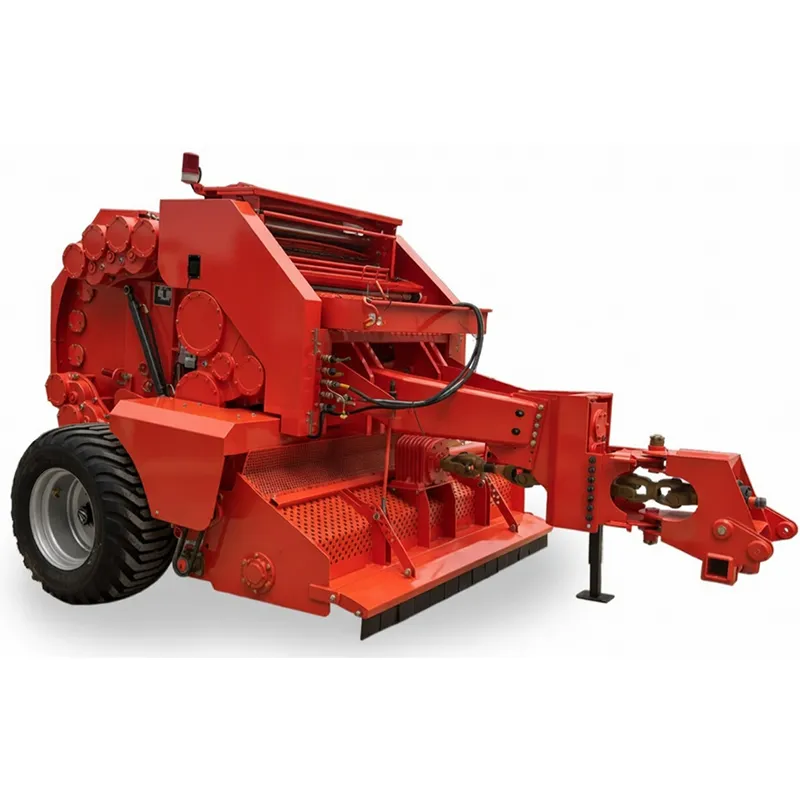
9YH-1.25B Round Baler Arigultural Baler (Hammer Claw)
The 9YH-1.25B Round Baler features a full enclosed gear transmission (no chains!) and exclusive Hammer Claw 5-axis 2,200 mm ultra-wide pickup that cleanly gathers rice straw, wheat straw, corn stalks, and forage with <15% soil contamination.
Produces dense, uniform bales of Ø1.25 m × 1.25 m weighing 200–350 kg — perfect for feed, biomass fuel, and commercial sale.
Only needs 110–150 HP tractor, works at 6–12 km/h, finishes one bale every 50 seconds. Super easy maintenance, zero chain worries, and proven reliability in Southeast Asia, South America, Europe, and beyond.
9YH-1.25B Round Baler (Hammer Claw) — Product Overview
The 9YH-1.25B Agricultural Round Baler (Hammer Claw) is a high-performance, gear-driven round baling machine engineered for professional straw field-removal operations across rice, wheat, corn, and mixed crop residue. Designed and manufactured by Brazil Agricultural Balers Co., Ltd, this machine represents the pinnacle of reliability and efficiency in modern baling technology. Unlike conventional chain-driven balers that suffer from frequent breakdowns and costly downtime, the 9YH-1.25B is powered entirely by a fully enclosed modular gear transmission system — delivering superior torque, minimal wear, and dramatically reduced failure rates even under heavy continuous-duty conditions.
With a 2,200 mm five-axis coaxial pickup system, the 9YH-1.25B ensures wide, thorough material collection while keeping soil contamination below 15% — a critical quality benchmark for downstream processing and forage markets. Each bale produced weighs between 200–350 kg with a tight, uniform density, making it ideal for storage, transport, and biomass fuel applications. Whether you are working large paddy fields in Southeast Asia, sprawling wheat plains in South America, or grass meadows in Europe, this round baler delivers consistent, professional results season after season. Backed by full lifecycle tracking management and after-sales service, the 9YH-1.25B offers outstanding value as a cost-effective alternative to premium international brands — without compromising on build quality, durability, or operator safety.
Certified under national standard GBT14290-2008 and protected by patent ZL 2017 2 0612476.X, the 9YH-1.25B embodies Brazil Agricultural Balers' commitment to innovation, safety, and agricultural productivity. It is the tool of choice for contractors and farmers who demand dependable performance and low total cost of ownership.
⚙️ Technical Specifications
TECHNICAL PARAMETER — 9YH-1.25B
🏆 Key Product Advantages
Full Gear Transmission
All-gear drive system delivers higher torque efficiency, dramatically lower failure rates, and smoother continuous operation compared to conventional chain-drive competitors.
Universal Straw Handling
Optimised for rice, wheat, corn, and all major crop residues. The 9YH-1.25B is the ideal field-removal tool for paddy straw operations, ensuring clean and efficient collection.
5-Axis 2,200 mm Coaxial Pickup
The five-axis coaxial pickup delivers superior stability and wider coverage versus conventional designs, ensuring thorough, clean material collection on every pass.
Fully Enclosed Gearbox
The sealed modulus-9 gearbox runs smoothly with minimal vibration, ensuring safe, simple operation and significantly reducing daily maintenance requirements.
High-Density, Low-Soil Bales
Produces dense, uniform bales of 200–350 kg with soil content consistently below 15% — meeting stringent quality standards for forage, biomass, and commercial markets.
Premium Quality, Superior Value
Matches or exceeds the performance of major international brands at a fraction of the cost. The 9YH-1.25B is the smart, cost-effective alternative for professional farmers and contractors worldwide.
Full Lifecycle Support
Comprehensive lifecycle tracking, remote management, and dedicated after-sales service ensure your investment is protected from commissioning through to end-of-life.
Wide Crop Compatibility
Wide working width and powerful forced-feed mechanism handle varied crop densities across different field conditions — from heavy wet rice straw to light dry grass — with equal efficiency.
🔩 Machine Components & Engineering Details
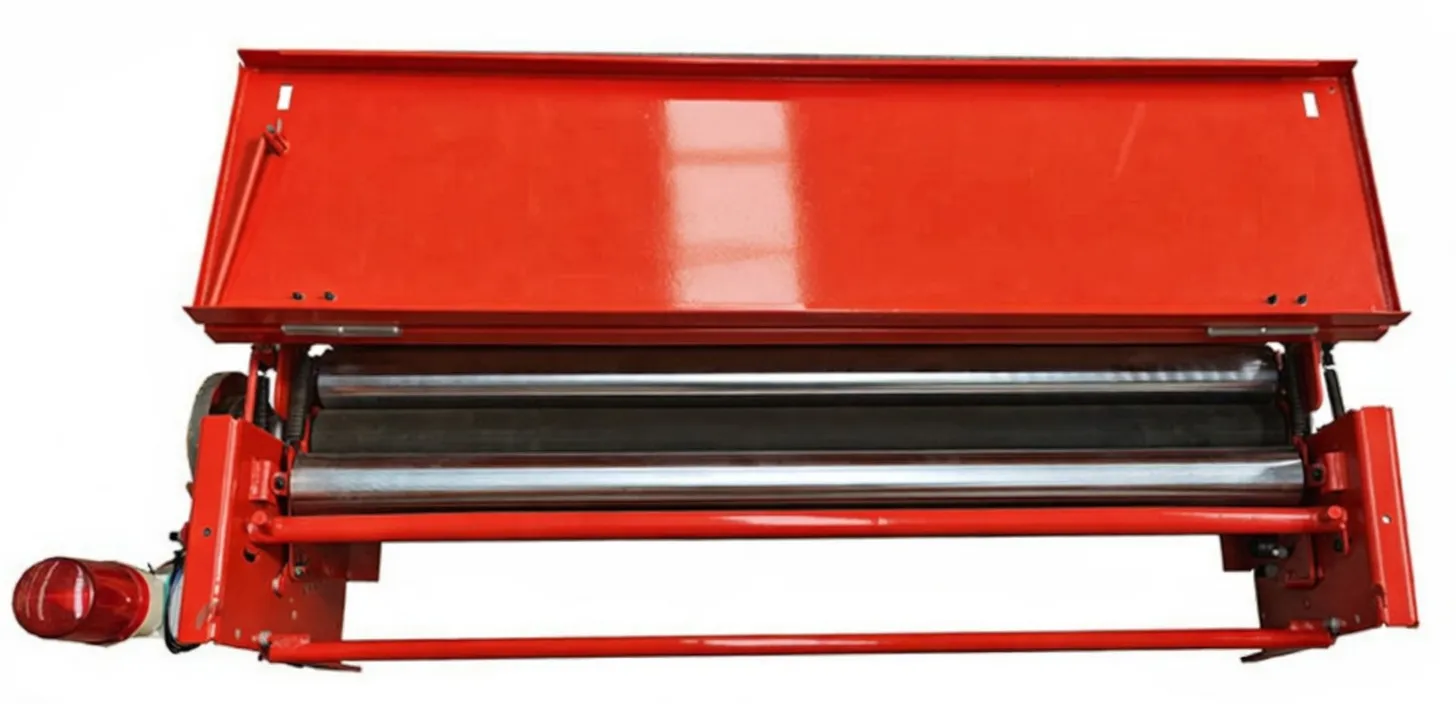
① Netting System Mechanism
The 9YH-1.25B employs a one-master two-slave three-roller net distribution structure for precise, consistent net release and application. This innovative configuration produces neat, aesthetically uniform bales with excellent wrapping stability. The tension and feed angle of the net are automatically controlled to prevent gaps, overlaps, or uneven coverage — resulting in bales that are compact, weather-resistant, and suitable for long-term outdoor storage. The net-cutting mechanism is integrated directly into the system, ensuring clean, automated cutoff with each cycle.
② Traction Mechanism
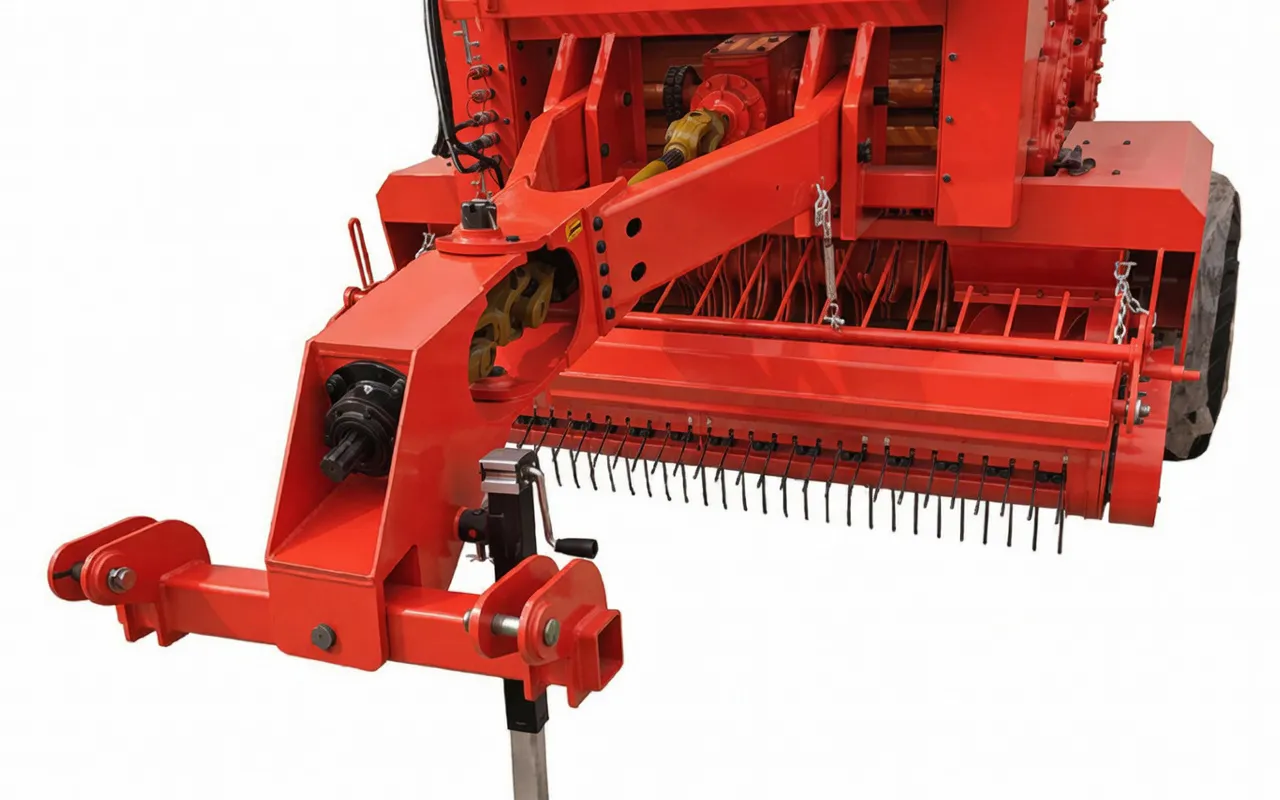
The 9YH-1.25B uses a suspended three-point hitch traction system enabling free raising and lowering for easy attachment, field manoeuvring, and road transport. Power is transmitted via a conventional PTO transmission shaft — a proven, industry-standard solution that delivers stable power output, is easily inspected in the field, and can be replaced without specialist tooling, keeping maintenance costs low.
This design philosophy stands in sharp contrast to chain-drive balers: all-gear new-generation round balers feature compact gear arrangements with high transmission power and efficiency, whereas chain-drive balers are prone to chain elongation, derailment, and debris blockage — all of which interrupt operation and increase downtime.
③ Design Concept — Forced Feed Mechanism
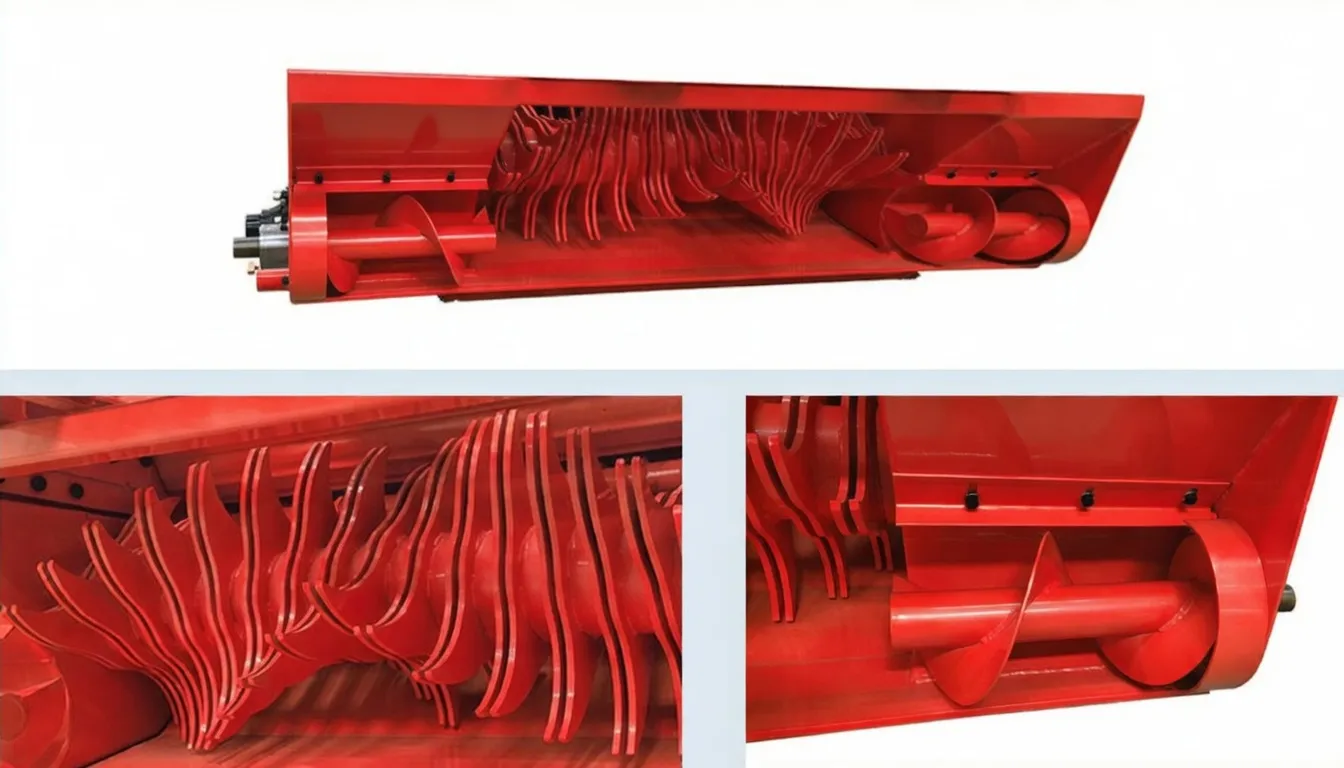
The forced-feed mechanism incorporates 34 blades arranged in a triple-point helical spiral pattern, ensuring a powerful, even material feed from both sides of the pickup width into the baling chamber. The enclosed lower floor panel can be opened quickly in the event of a blockage, allowing rapid clearance and resumption of operation. A dedicated dust protection cover on the feed auger significantly reduces wear and mechanical damage caused by dust and crop debris entering the drive mechanism — a common failure point in competing designs.
④ Gearbox
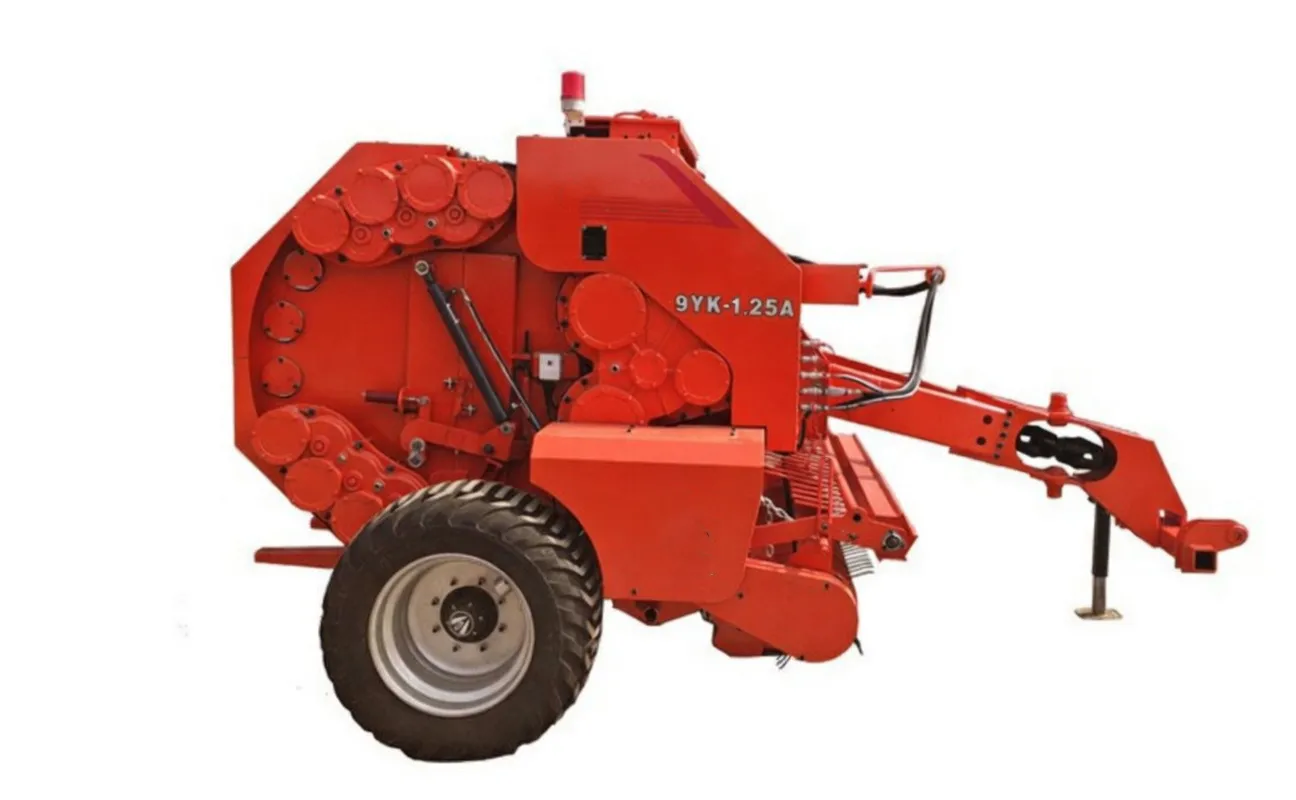
The modulus-9 fully enclosed gearbox is the heart of the 9YH-1.25B's industry-leading reliability. Heavy-duty hardened gears transmit power smoothly with minimal backlash, even under peak load. The sealed housing prevents contamination from dust, moisture, and crop debris, ensuring consistent performance and extending component life well beyond that of open-chain or belt-drive systems. Routine maintenance is reduced to simple oil level checks, with full oil changes recommended only at extended service intervals.
⑤ Drive Roller
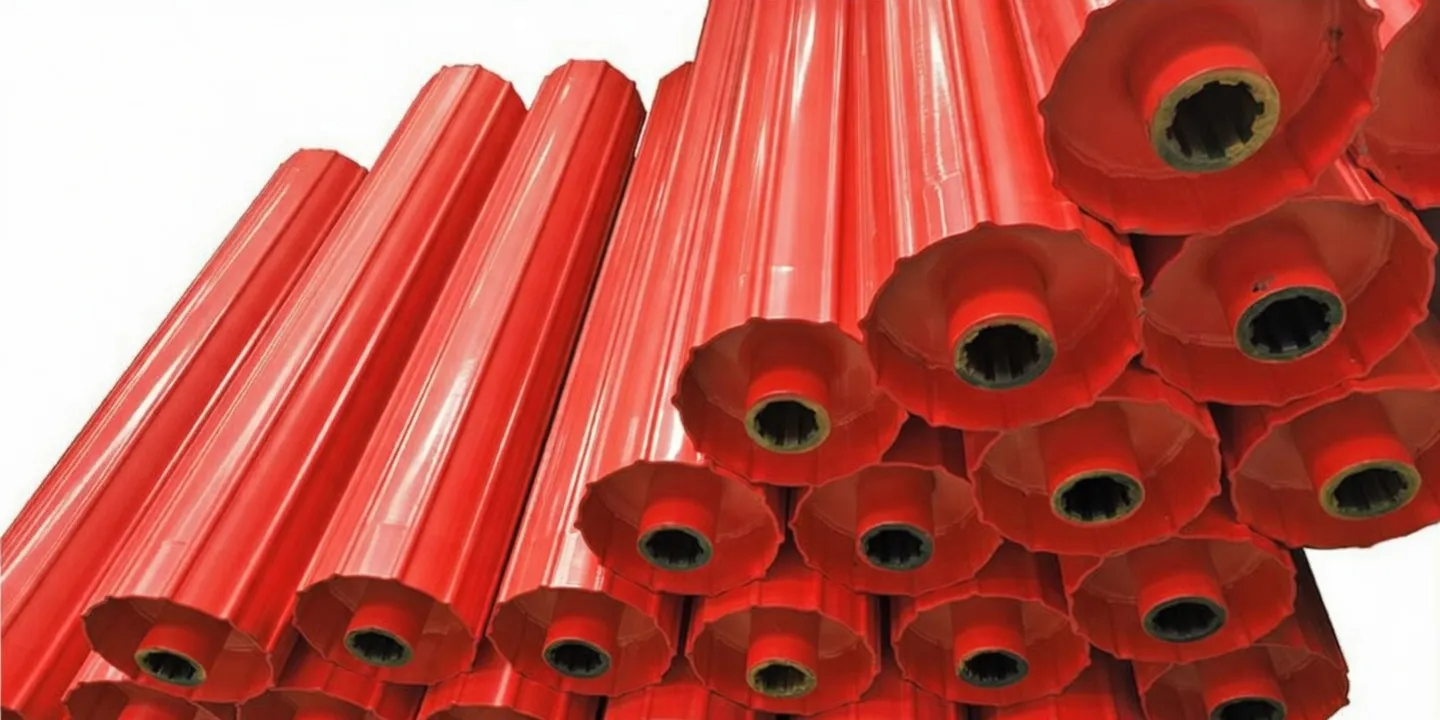
The drive rollers feature a centre-axis reinforced design that achieves superior coaxiality — ensuring even pressure distribution across the full width of the baling chamber. This eliminates the side-loading wear that shortens roller lifespan in conventional balers, and contributes directly to the uniform, high-density bale shape characteristic of the 9YH-1.25B. The reinforced shaft construction is both practical and highly durable, performing reliably across tens of thousands of baling cycles.
⑥ Collection System (Pickup)
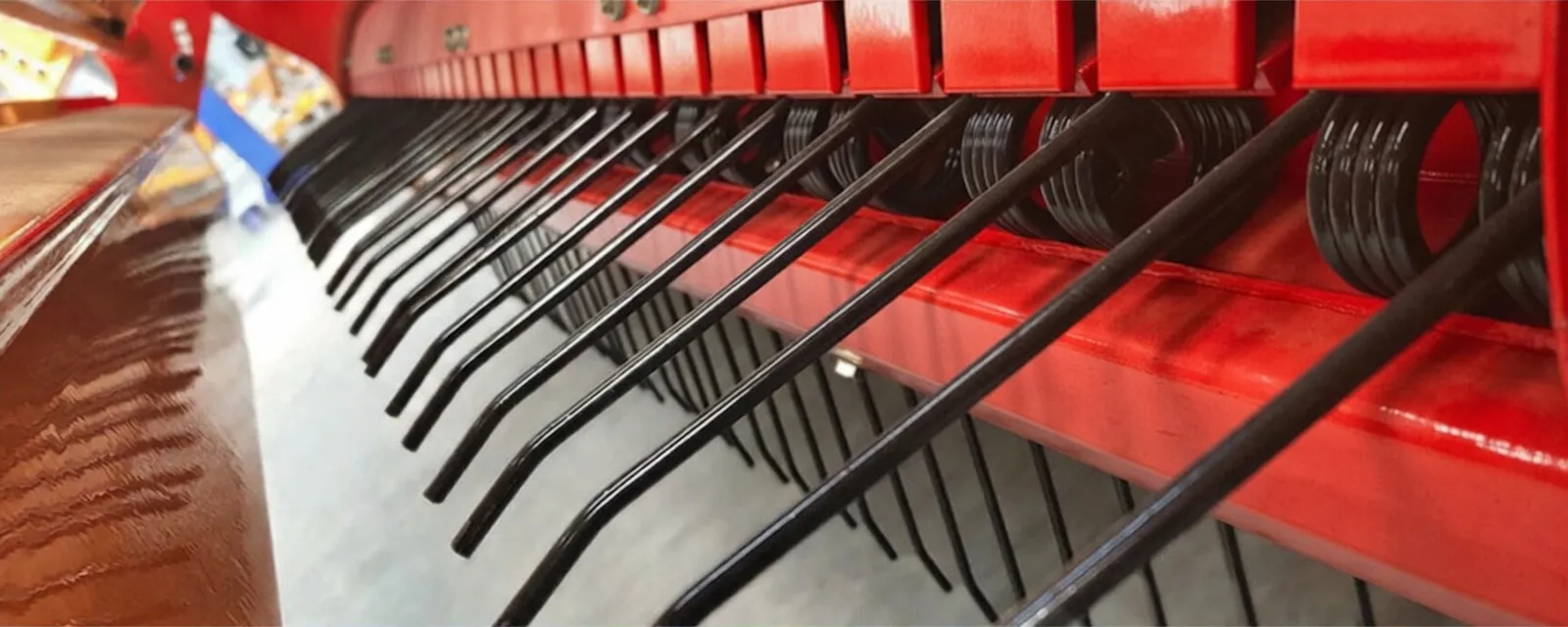
The new-generation model adopts a five-axis guard-ring-free pickup design that greatly simplifies the installation and replacement of pickup tines. Operators can change worn or damaged tines quickly in the field without specialist tools, minimising unproductive downtime during the harvest season. The wider 2,200 mm working width ensures thorough crop pick-up even at higher forward speeds, while the coaxial arrangement of five axes provides greater structural stability and consistent tine-to-ground contact compared to four-axis designs.
⑦ Hydraulic System
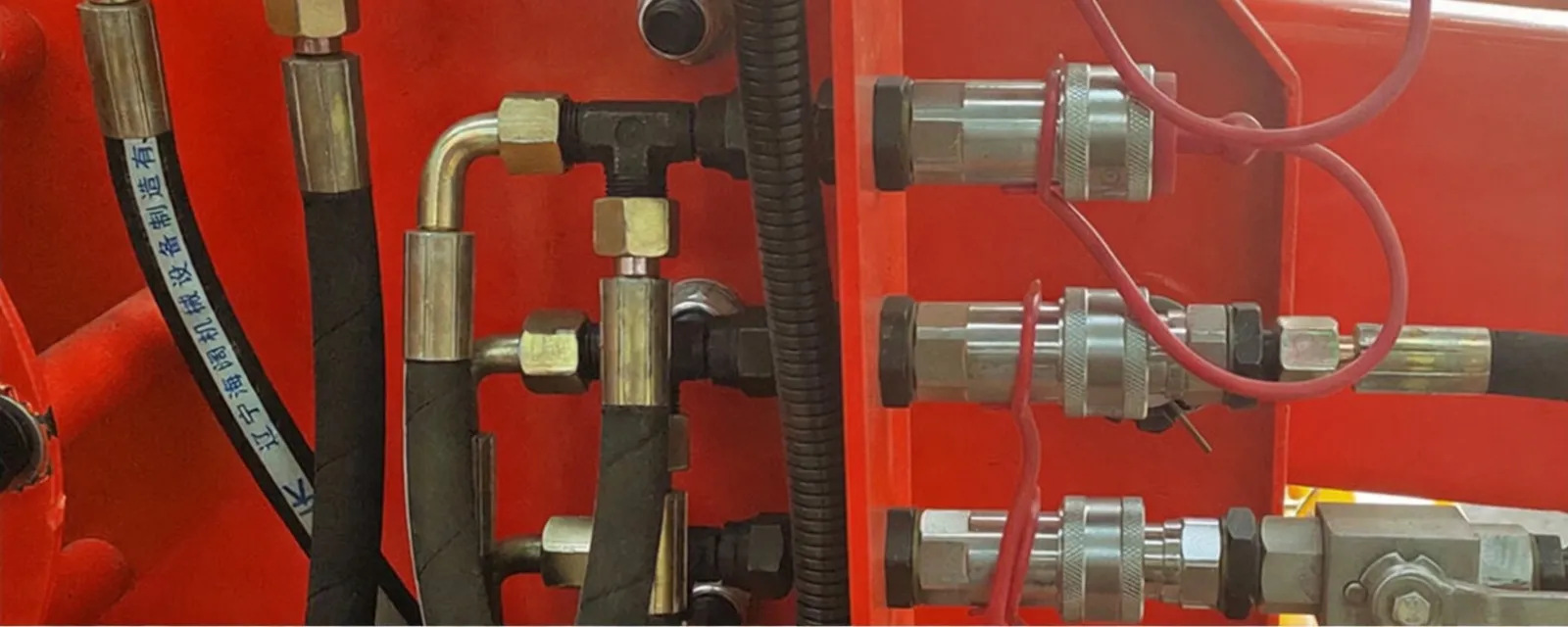
The hydraulic system on the 9YH-1.25B uses a direct pipeline connection layout, eliminating complex valve banks and reducing potential leak points. The straightforward plumbing ensures fast, reliable operation of the chamber door opening/closing cycle, with minimal response lag. Connections are clearly labelled and standardised to match common tractor hydraulic specifications, making the machine easy to connect, configure, and service by operators without hydraulic engineering expertise.
⚡ How It Works — Working Principle
The 9YH-1.25B Round Baler operates through a continuous, automated sequence that begins the moment the tractor's PTO shaft engages. Power from the tractor (110–150 HP) is transmitted via the PTO shaft to the machine's central modulus-9 gearbox, which in turn drives all internal sub-systems — the pickup rotor, forced-feed auger, baling chamber rollers, and net-wrapping mechanism — in precise, synchronised rotation.
As the machine advances across the field at 6–12 km/h, the five-axis coaxial pickup rotor (2,200 mm wide) continuously lifts crop residue from the windrow using its spring-loaded hammer-claw tines. The tines penetrate deep into the crop mat, lifting material cleanly from the ground and transferring it rearward toward the forced-feed chamber. The wide pickup width and five-axis arrangement ensure that even scattered or unevenly distributed crop is collected thoroughly with each pass.
Inside the feed channel, the 34-blade helical auger assembly aggressively conveys material into the baling chamber in a controlled, even flow. The three-point forced-feed system prevents blockages by distributing crop laterally across the full width of the chamber entrance, ensuring no uneven density buildup. Should a blockage occur, the openable lower floor panel provides immediate access for rapid clearance.
Inside the fixed-wall baling chamber, multiple coaxial drive rollers compress and rotate the incoming material into a tight cylindrical bale. The centre-reinforced drive rollers apply uniform, high-pressure force across the full bale diameter, progressively increasing density as the bale grows. An electronic fill sensor monitors the bale diameter in real time, triggering a full-chamber alarm when the target diameter (1,250 mm) is reached.
Upon receiving the full-chamber signal, the operator stops forward motion and the net-wrapping cycle initiates — either manually via the control panel or automatically after a pre-set delay. The three-roller net distribution system feeds wrapping net evenly across the bale surface, producing a neat, stable wrap with excellent coverage. Once the wrapping is complete, the net-cutting knife severs the net cleanly. The chamber door then opens hydraulically and the finished bale — weighing between 200 and 350 kg — is ejected onto the ground. The door closes, the system resets, and the cycle begins again within seconds.
📋 Step-by-Step Operation Flow
Tractor Hitching
Connect the baler to the tractor's three-point hitch. Attach the PTO shaft securely. Confirm all hydraulic lines are connected and safety guards are in place before starting.
Pickup
Engage the PTO and drive along the windrow. The 2,200 mm five-axis pickup rotor lifts crop residue cleanly from the ground. Adjust forward speed (6–12 km/h) to match crop density.
Forced Feeding
Material is conveyed by the 34-blade helical auger into the baling chamber. The three-point forced-feed design ensures uniform lateral distribution and prevents blockages.
Compacting & Rolling
The chamber's coaxial drive rollers compress the material into a dense, uniform cylinder. A sensor monitors bale diameter. A full-chamber alarm sounds when the target size (Ø1,250 mm) is reached.
Net Wrapping
Stop forward travel. The three-roller net wrapping system automatically (or manually) applies wrapping net over the bale. The net is cut cleanly by the integrated cutting knife upon completion.
Bale Ejection
Open the chamber door via the hydraulic control. The finished bale (200–350 kg) is ejected onto the field. Allow the door to fully rise before closing to ensure net-knife reset. Restart and repeat.
🎛️ Operation & Adjustment Guidelines
① Manual Net Wrapping
Select "Manual Wrapping" on the controller. When the full-chamber alarm sounds, stop the tractor and press the "Manual Wrap" button once (or multiple times as needed). Monitor the wrapping process visually. After net cutting, open the chamber door to eject the bale and verify the bale counter has incremented.
② Automatic Net Wrapping
Select "Auto Wrapping" on the controller. Upon full-chamber alarm, simply stop the tractor and wait — the machine will automatically initiate wrapping after a pre-configured time delay. After the net is cut, open the chamber door, eject the bale, and confirm the counter count. Resume forward travel to begin the next cycle.
③ Speed Adjustment by Crop Density
In thick, dense crop conditions, reduce forward speed to maintain a steady feed rate and avoid overloading the chamber. In sparse or thin windrows, increase speed to maintain productivity. An ideal baling cycle of approximately 50 seconds per bale indicates optimal speed selection for the current conditions.
④ Narrow Windrow Handling
When working with narrow windrows, programme alternating left-right feed cycles using the controller's lateral feed timing function. This distributes material evenly across the full bale width, ensuring uniform density and a consistent cylindrical bale shape with a neat external appearance.
⑤ Turning Procedure
When making sharp turns, disengage PTO output before the turn angle becomes excessive. This protects the PTO shaft from stress damage. Resume PTO engagement only after both the tractor and baler are realigned in a straight line.
⑥ Clearing a Blockage
In the event of a blockage, immediately disengage PTO output and open the lower floor panel to clear the obstruction. Re-engage PTO, verify that the machine is running normally, then close the floor panel and continue operation. Never attempt to clear a blockage with the PTO engaged.
⑦ Responding to Full-Chamber Alarm
Upon hearing the full-chamber alarm, stop forward travel immediately. Do not disengage PTO — the machine requires continuous rotation to complete the wrapping cycle. Maintain PTO engagement throughout the entire net-wrapping and bale-ejection sequence.
⑧ Bale Ejection & Net Knife Reset
After net wrapping is complete, open the chamber door promptly to eject the bale. Prolonged bale retention inside the chamber risks net abrasion and damage. After ejection, do not close the chamber door until it has fully risen to its upper limit — this ensures the net-cutting knife returns to its home position correctly before the next cycle.
⚠️ Important Precautions
① Tractor Hitch Height
Do not raise the tractor hitch arm excessively. An overly elevated hitch position increases the angle between the tractor PTO and the baler input shaft during turns, placing excessive stress on the PTO shaft universal joints and risking premature wear or failure. Maintain the hitch at a level that keeps the PTO shaft as close to horizontal as practical during field operation.
② Daily Gearbox Oil Check
Inspect the gearbox oil level every day before starting operation. Check for signs of oil seepage around seals and gaskets. Maintaining the correct oil level is critical to the long-term performance of the gear transmission system. Neglecting this check is the single most common cause of premature gearbox wear and unexpected failures in the field.
③ Pickup Tine Height
Set pickup tines so that their lowest point is just slightly below ground level — not more. Setting tines too low causes excessive soil pickup, increases soil content in bales above the 15% threshold, and accelerates tine wear. Setting tines too high results in incomplete crop collection. Adjust tine height at the beginning of each field or when soil/crop conditions change significantly.
📊 Brand Comparison
How the 9YH-1.25B stacks up against leading international brands
* Competitor data based on publicly available product specifications. Actual performance may vary by model variant and working conditions.
⭐ Customer Reviews
What farmers and contractors worldwide say about the 9YH-1.25B
"I have been farming rice in Mato Grosso for over twenty years and tried several imported balers over the seasons. The 9YH-1.25B stood out from the first day because of how clean the pickup is — very little straw left behind even in our heavier, wetter crop conditions after wet-season harvests. The gear drive system is noticeably different from the chain machines I used previously. In two full seasons I have had zero drivetrain breakdowns, compared to at least two or three chain replacements per year with my old machine. The 200–320 kg bales it produces are tight and consistent, which our biomass buyer demands. For the price, there is nothing comparable on the Brazilian market right now."
| Rice & Soybean Farmer, Mato Grosso, Brazil
"As a custom baling contractor working across New South Wales and Queensland, machine downtime costs me real money every day. I purchased the 9YH-1.25B after comparing it carefully against both New Holland and Krone machines at a similar price point. The fully enclosed gearbox was the deciding factor — it simply requires less attention in dusty Australian paddock conditions. After one full wheat and canola harvest season covering around 4,200 hectares, the machine performed without a single mechanical stoppage. The 2,200 mm pickup width is genuinely wider than what most competitors offer at this price, and it shows in the cleanliness of the field after each pass. Maintenance costs were negligible. I will be ordering a second unit for the upcoming season."
| Agricultural Contractor, New South Wales, Australia
"We operate a medium-sized farm cooperative in the Beauce region of France, primarily producing wheat and oilseed rape. We evaluated the 9YH-1.25B against two European brands and decided to trial one unit last autumn. Our overall assessment after the season is positive. The bale quality is comparable to machines at two to three times the price — density is good and the net wrap is consistently applied. The soil content in bales was generally well under 15%, which is important for the hay and straw market here. We did experience a minor initial adjustment period with the controller settings, but after a call to the after-sales team the issue was resolved quickly. The gear drive design gives us confidence in long-term reliability. We are considering purchasing a second machine for the cooperative."
| Farm Cooperative Manager, Beauce, France
"I run a paddy rice operation across several thousand acres in Punjab and have been using the 9YH-1.25B for two harvests now. The combination of rice straw removal and low soil content is critically important to us — buyers of straw for mushroom cultivation and animal feed have strict quality requirements, and this machine meets them consistently. The 50-second baling cycle is fast enough to keep pace with our combine harvesting schedule when running three machines simultaneously. The ease of tine replacement on the five-axis guard-free pickup has been a practical benefit in the field — my operators can change a worn tine in minutes without calling for outside service. Spare parts availability and the manufacturer's response time have both been satisfactory. Very good value at this price level."
| Rice Farmer & Contractor, Punjab, India
"We operate a large-scale corn and soybean production company in Buenos Aires Province, and straw management is a significant part of our annual operational budget. I was initially cautious about purchasing a Chinese-manufactured baler, having had mixed experiences with agricultural machinery in the past. However, after inspecting the 9YH-1.25B at an agricultural fair and speaking with the technical team, we decided to trial a unit. After one full maize straw season, I can say the build quality is solid and the gear drive has proven to be as reliable as described. Bale density is consistent and the hydraulic door mechanism is fast and smooth. My operators found it straightforward to learn and operate. The after-sales support has been responsive and professional. I recommend this machine to any farmer looking for a cost-effective, dependable baler for large-scale operations."
| Agribusiness Manager, Buenos Aires Province, Argentina
"I farm wheat and barley in the Eastern Cape and have been contracting straw baling for neighbouring farms for several years. I purchased the 9YH-1.25B primarily based on its price point versus specifications — the 2,200 mm pickup width and five-axis design for the asking price were compelling. After one season's use across mixed terrain including some rocky, uneven ground, I am satisfied with the machine's durability. The pickup tine replacement procedure is genuinely quick and easy, and the blockage-clearance floor panel has been useful on a couple of occasions in lodged, tangled crop areas. The bales are well-formed and well within the density requirements of my customers. I would have liked slightly faster after-sales response on one occasion, but overall the support has been acceptable. A strong performer at its price level."
| Grain Farmer & Baling Contractor, Eastern Cape, South Africa
❓ Frequently Asked Questions
Q1: What tractor horsepower is required to operate the 9YH-1.25B?
The 9YH-1.25B is designed to be paired with tractors producing between 110 and 150 horsepower (HP). Using a tractor within this power range ensures that the PTO shaft delivers adequate torque to drive all machine systems — including the pickup, feed auger, baling chamber, and net-wrapping mechanism — at full capacity without risk of overload. Using a tractor below 110 HP may result in reduced performance and potential drivetrain stress, especially in dense or wet crop conditions.
Q2: What types of crops can the 9YH-1.25B handle?
The 9YH-1.25B is suitable for a wide range of crop residues including rice straw, wheat straw, corn stalks, rapeseed straw, soybean straw, and mixed grass or forage crops. Its forced-feed mechanism and wide pickup are specifically designed to handle the demanding characteristics of rice straw — which is among the most difficult crop residues to bale cleanly — making it an effective tool for paddy field clearance operations in particular.
Q3: How long does it take to complete one baling cycle?
Under typical field conditions, a complete baling cycle — from the start of filling to bale ejection — takes approximately 50 seconds. This includes filling time, net wrapping, and chamber door operation. Actual cycle time will vary depending on crop density, forward speed, and net-wrapping settings. The 50-second benchmark represents optimal throughput and serves as a useful guide for adjusting forward speed during operation.
Q4: What is the typical weight of a finished bale?
Finished bales from the 9YH-1.25B typically weigh between 200 and 350 kilograms, depending on crop type, moisture content, and bale density settings. Rice straw at harvest moisture tends to produce heavier bales, while dry wheat straw may produce bales at the lower end of the range. The consistent bale diameter of 1,250 mm × 1,250 mm length enables standardised storage, handling, and transport logistics.
Q5: How does the all-gear drive system compare to chain-drive balers?
Chain-drive balers are prone to chain wear, elongation, derailment, and blockage — all of which interrupt operation and require time-consuming field repairs. The 9YH-1.25B's fully enclosed modulus-9 gear transmission eliminates these failure modes entirely. Gears transmit higher torque more efficiently, do not elongate or skip teeth, and are protected from crop debris by the sealed housing. The result is significantly lower failure rates, higher uptime, and reduced total maintenance cost over the machine's service life.
Q6: How is the soil content in bales kept below 15%?
The 9YH-1.25B achieves low soil content through careful optimisation of pickup tine height, the use of hammer-claw tines that lift crop without scooping soil, and the forced-feed mechanism that channels material into the chamber efficiently without creating airborne dust. Correct adjustment of pickup tine height — so tines sit just fractionally below ground level — is essential to achieving the <15% specification. The standard GBT14290-2008 governs this parameter.
Q7: Can the 9YH-1.25B operate in wet or damp crop conditions?
The 9YH-1.25B can operate in moderately wet crop conditions, which is particularly relevant for rice straw harvested shortly after paddy drainage. The forced-feed mechanism and high-torque gear drive maintain material flow even when crop is dense or slightly damp. However, excessively wet conditions may increase bale weight and soil content, and may raise blockage risk. It is recommended to reduce forward speed in wet conditions and monitor bale quality accordingly.
Q8: How does the automatic net wrapping system work?
When the bale reaches its target diameter, the full-chamber alarm triggers automatically. In automatic mode, the machine initiates net feeding after a pre-set time delay, wraps the bale with the three-roller netting system, and cuts the net via the integrated cutting knife — all without operator intervention beyond stopping the tractor. In manual mode, the operator presses the wrap button on the controller after the alarm sounds. Both modes allow the operator to visually confirm net coverage before ejecting the bale.
Q9: What regular maintenance does the 9YH-1.25B require?
Daily maintenance consists primarily of checking the gearbox oil level and inspecting for leaks or abnormal wear. Pickup tines should be inspected for bending or breakage and replaced as needed — the guard-free five-axis design makes this quick and tool-free. The dust cover on the feed auger should be checked periodically. Gearbox oil changes are recommended at the manufacturer's specified service intervals. There are no chains, belts, or tensioners to adjust, which significantly reduces routine maintenance time compared to conventional balers.
Q10: What should I do if a blockage occurs during operation?
Immediately disengage PTO output and stop the tractor. Open the lower floor panel of the feed chamber to access and remove the blockage by hand or with a hook tool. Do not attempt to clear the blockage while the machine is running. Once the obstruction is removed, re-engage PTO and allow the machine to reach normal operating speed before closing the floor panel and resuming forward travel. Blockages are most commonly caused by operating at excessive forward speed in very thick, dense, or tangled crop conditions.
Q11: Is the machine compatible with standard tractor PTO specifications?
Yes. The 9YH-1.25B uses a standard PTO transmission shaft compatible with tractors equipped with a standard 540 or 1,000 RPM PTO output. The suspended three-point hitch traction system conforms to Category II/III standards, ensuring compatibility with the vast majority of modern agricultural tractors in the 110–150 HP range worldwide.
Q12: What warranty and after-sales support is available?
Brazil Agricultural Balers Co., Ltd provides comprehensive warranty coverage and dedicated after-sales technical support for the 9YH-1.25B. Our full lifecycle tracking programme monitors machine performance and maintenance milestones, ensuring timely alerts for scheduled service. Spare parts are available globally through our distribution network. For specific warranty terms, service agreements, and regional dealer information, please contact our sales team directly.
🏭 About Brazil Agricultural Balers Co., Ltd
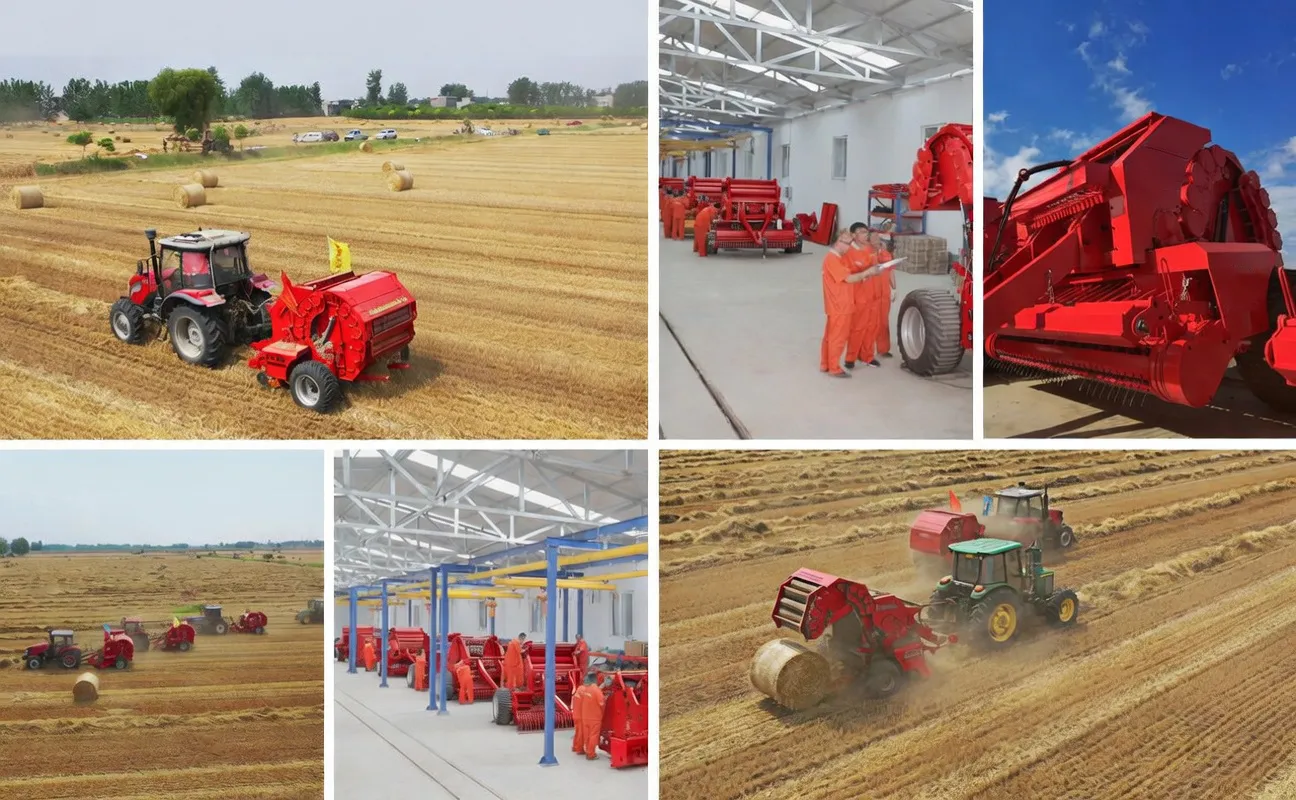
Brazil Agricultural Balers Co., Ltd is a professional manufacturer and global supplier of high-performance agricultural baling equipment, specialising in round balers, square balers, and associated straw field-removal machinery. With decades of accumulated engineering experience and a deep understanding of the practical demands of modern large-scale agriculture, we have built a reputation for designing machines that deliver real-world performance, not just impressive specifications on paper.
Our state-of-the-art manufacturing facility is equipped with advanced CNC machining centres, precision gear-cutting equipment, automated assembly lines, and rigorous quality control stations at every stage of production. Every machine we produce undergoes comprehensive pre-delivery testing to verify compliance with our internal standards as well as national execution standard GBT14290-2008. Our R&D team continuously develops new technologies and improvements — reflected in patents such as ZL 2017 2 0612476.X — to ensure that our products remain competitive at the forefront of agricultural mechanisation.
At Brazil Agricultural Balers, we believe that premium baling technology should not be the exclusive domain of large-scale operators with the budget for major international brands. Our mission is to make high-reliability, high-efficiency baling equipment accessible to farmers, cooperatives, and contractors worldwide — from the paddy fields of Southeast Asia to the wheat plains of Europe, South America, and beyond. Our product range is designed to replace or match the performance of leading premium brands while offering a significantly more competitive total cost of ownership.
We are committed to providing not just equipment, but complete solutions. Our full lifecycle tracking and management programme keeps every machine under active remote monitoring, enabling proactive maintenance alerts and rapid technical response. Our global after-sales service network ensures that operators receive timely professional support wherever they are located. From initial consultation and machine selection, through commissioning, operator training, and long-term service — we are with our customers at every stage.
Whether you are a first-time buyer evaluating your options or an experienced contractor looking to upgrade your fleet, we welcome you to explore our product range and discover why farmers across six continents trust Brazil Agricultural Balers for their straw management needs. Contact our international sales team today for a personalised quotation, technical consultation, or to locate your nearest authorised dealer.
Related products
-
9YG-1.0C Type Round Baler | Replacement of John Deere Baler
-
9YG-2.24D (S9000 Classic) Round Baler | Replacement of John Deere Baler
-
9YH-1400 Round Baler Agricultural Baler
-
9YG-1.25A Type Round Baler | Replacement of John Deere Baler
-
9YG-2.24D (S9000 Superior) Round Baler | Replacement of John Deere Baler