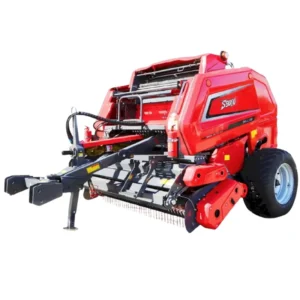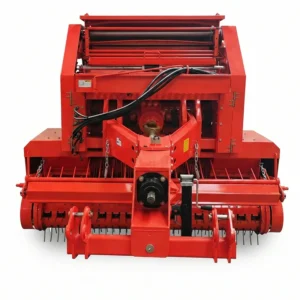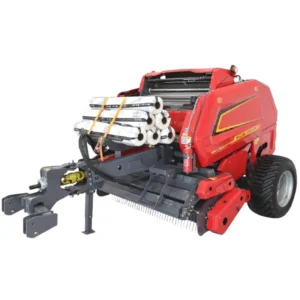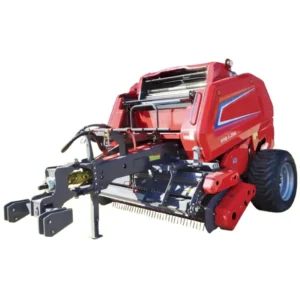
9YO-1-25 Round Baler Arigultural Baler
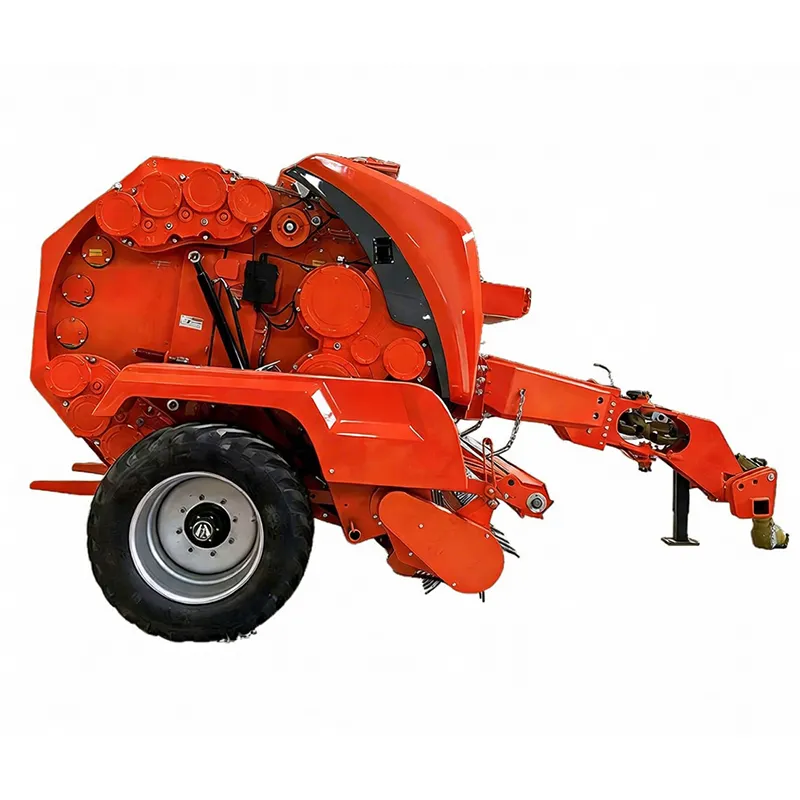
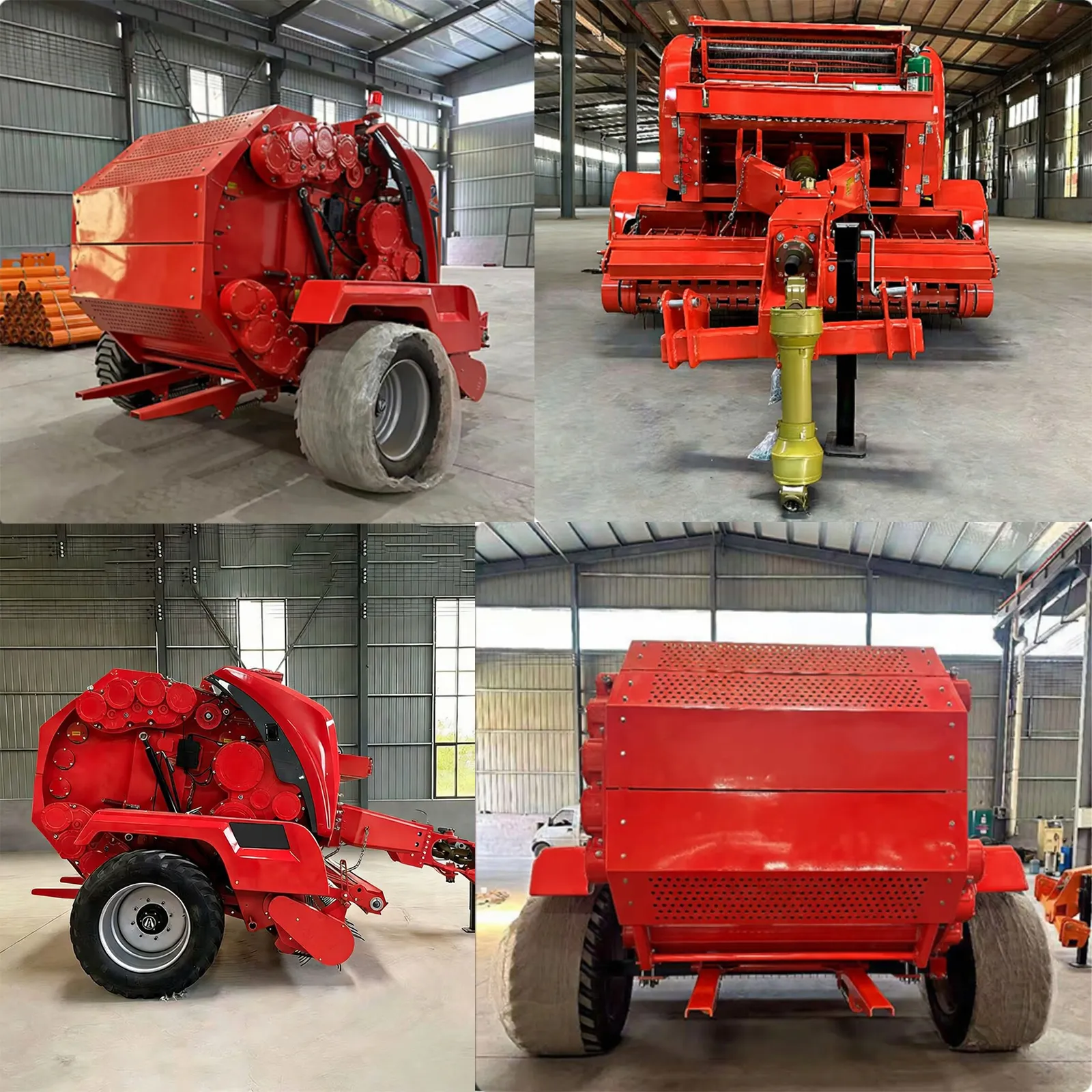
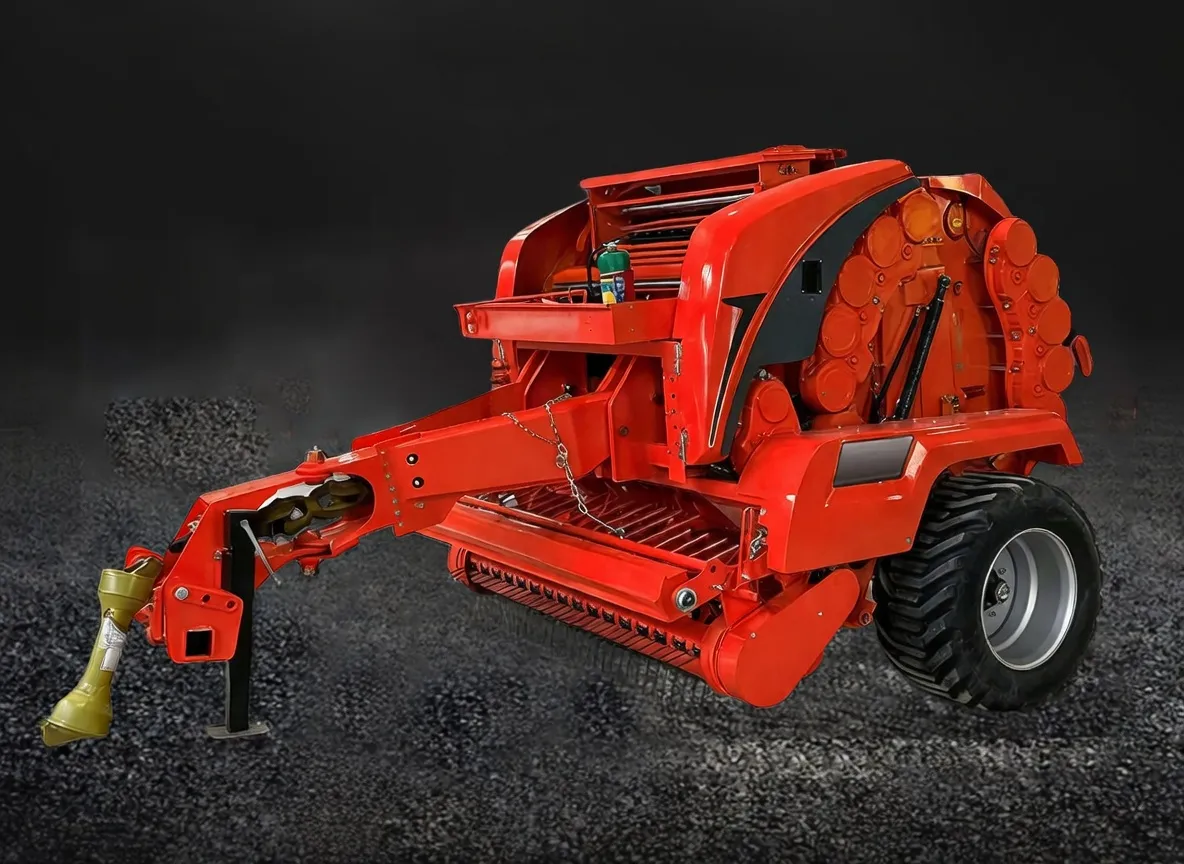
The 9YO-1-25 Round Baler is a high-performance agricultural baling machine manufactured by Brazil Agricultural Balers Co., Ltd. Featuring an 18-roller compression chamber, dual-mode pickup system (Spring Tooth & Hammer Claw), and automated net wrap, it produces dense cylindrical bales (1.25 m × 1.20–1.50 m) at 40–80 bales/hour. Compatible with 50–80 HP tractors via 540 RPM PTO.
- Bale Density: 115–200 kg/m³ — ideal for silage fermentation & hay storage
- Dual Pickup: Switch between grass windrows & standing corn stalks
- Anti-Clog Feeding: Auger + Tine Roller + Drum system prevents blockages
- Net Wrap Standard | Twine wrap optional
- OEM/ODM Available: Custom color, branding & technical adaptation
- Certified: ISO 9001 | CE | AAA Credit Enterprise
✓ Cost-effective alternative to John Deere, New Holland & Vermeer round balers — backed by factory-direct pricing, 1-year warranty, and global spare parts support.
9YO-1-25 Round Baler — High-Performance Agricultural Baler
The 9YO-1-25 Round Baler from Brazil Agricultural Balers Co., Ltd. is an advanced agricultural baling machine designed for efficient hay, straw, and silage compression. Built around a robust 18-roller chamber system, this round baler delivers consistent, high-density cylindrical bales measuring 1.25 m in width and 1.20–1.50 m in diameter. Whether you are managing large-scale livestock feed operations or processing crop residue for biomass applications, the 9YO-1-25 is engineered to handle a wide range of forage materials with minimal operator intervention. It integrates seamlessly with standard 50–80 HP tractors via a 540 RPM PTO connection, making it a versatile choice for farms of various scales across South America, Central Asia, and beyond.
One of the defining innovations of this model is its interchangeable dual-mode pickup system. Operators can switch between a Spring Tooth configuration for windrowed grass and a Hammer Claw mechanism for harvesting standing corn stalks directly — eliminating the need for a separate shredding pass. Combined with an advanced auger-tine roller-drum feeding system, this baler prevents blockages even in dense crop rows, ensuring smooth and uninterrupted operation during peak harvest season.
⚙ Technical Specifications
✓ Key Advantages of the 9YO-1-25 Round Baler
⚙ Dual-Mode Pickup System
The interchangeable Spring Tooth and Hammer Claw pickup mechanisms allow a single machine to handle both windrowed hay and standing corn stalks. This eliminates the need for a separate shredding machine and reduces the total number of field passes required, saving fuel and labor costs significantly.
📈 High-Density Compression
With 18 heavy-duty steel rollers operating in a roller-type chamber, the 9YO-1-25 compresses forage to densities up to 200 kg/m³. Higher density means lower transportation costs per ton, reduced storage footprint, and better preservation of nutritional value through tighter air exclusion — critical for quality silage fermentation.
⚡ Anti-Clog Feeding Technology
The advanced auger-plus-tine-roller-plus-drum feeding combination delivers a smooth and continuous crop flow into the baling chamber. Even when working with high-moisture silage or thick corn stalks, the feeding system prevents blockages that commonly plague belt-type balers, ensuring uninterrupted operation during critical harvest windows.
💰 Lower Operating Costs
Compared to premium-brand alternatives, the 9YO-1-25 provides comparable productivity at a significantly lower acquisition cost. Reinforced gearboxes and chain-driven components reduce maintenance frequency, and standard replacement parts are readily available through our global distribution network. Many operators report achieving full return on investment within two to three harvest seasons.
🌎 Wide Tractor Compatibility
Requiring only 50–80 HP, the baler pairs well with mid-range tractors from most major manufacturers including John Deere, New Holland, Kubota, Massey Ferguson, LS Mtron, and Daedong (Kioti). Its standard 540 RPM PTO input and Category II 3-point hitch ensure seamless integration without expensive adapter kits.
🛡 Robust Build Quality
Manufactured in our 32,000 m² facility using CNC laser cutting machines and automatic welding lines, every 9YO-1-25 unit undergoes strict quality control. The reinforced chassis is designed to withstand the high torque and vibration inherent in processing thick biomass. Electrostatic spraying ensures a durable, corrosion-resistant finish suitable for humid tropical environments.
⚙ How the 9YO-1-25 Round Baler Works
The 9YO-1-25 Round Baler operates on the well-established roller-type baling principle, enhanced with proprietary feeding and compression technologies developed by Brazil Agricultural Balers Co., Ltd. The entire process begins when the tractor-mounted PTO shaft transmits rotational power at 540 RPM to the baler's main gearbox. This energy is distributed through a reinforced chain-drive system to power three key subsystems simultaneously: the pickup mechanism, the feeding system, and the baling chamber.
At the front of the machine, the pickup mechanism — equipped with either spring tines or hammer claws depending on the crop type — lifts the material from the ground or cuts it from standing position. The collected crop is then fed into the auger-tine roller-drum assembly. This multi-stage feeding system serves a critical function: it pre-compresses and evenly distributes the material before it enters the main baling chamber. The auger moves crop laterally to ensure full-width chamber utilization, while the tine roller and drum accelerate the material inward, preventing clumps that could cause uneven bale formation.
Inside the baling chamber, 18 high-strength steel rollers (each with a 222 mm diameter) compress the incoming material into a tight cylindrical shape. As crop continues to feed in, the bale rotates between the rollers, building density layer by layer. A pressure monitoring system allows the operator to track bale formation in real time. Once the bale reaches the pre-set diameter (adjustable between 1.20 m and 1.50 m), an audible and visual alert signals the operator to engage the automated net wrap system. The net is applied in several rotations around the bale to secure its shape. Finally, the hydraulic tailgate opens, and the completed bale rolls out onto the ground — ready for collection, wrapping, or transport.
🛠 Step-by-Step Operation Guide
Pre-Operation Inspection
Check PTO shaft connections, hydraulic hoses, chain tension, net wrap supply, and tire pressure. Ensure all safety shields are properly installed and the gearbox oil level is adequate.
Attach to Tractor
Connect the baler to the tractor using the Category II 3-point hitch. Attach the PTO shaft at 540 RPM setting and connect the hydraulic lines for tailgate operation.
Select Pickup Mode
Install the Spring Tooth attachment for raked hay and grass windrows, or switch to the Hammer Claw attachment for direct standing corn stalk harvesting.
Engage PTO & Begin Baling
Start the tractor PTO and drive forward along the windrow at a steady speed of 5–10 km/h. The pickup will gather material automatically and feed it into the baling chamber.
Monitor Bale Formation
Watch the bale size indicator on the control panel. When the bale reaches the desired diameter (1.20–1.50 m), an audible alarm will sound.
Wrap & Eject the Bale
Stop forward movement and activate the automatic net wrap system. Once wrapping is complete, use the hydraulic tailgate control to eject the finished bale. Resume forward travel immediately to begin the next bale.
⚠ Safety Precautions & Maintenance Notes
⚠ PTO Shaft Safety
Always ensure the PTO shaft guard is intact before operation. Never approach a rotating PTO shaft. Disengage the PTO and turn off the engine before performing any maintenance near the driveline.
⚠ Tractor Matching
Operate only with tractors rated 50–80 HP. Using an underpowered tractor can overstress the PTO and driveline components. On hilly terrain, select a tractor at the higher end of the HP range for safe performance.
⚠ Blockage Removal
If a blockage occurs, immediately stop forward motion and disengage the PTO. Wait for all moving parts to come to a complete stop before opening any covers. Never attempt to clear a blockage while components are still rotating.
🔧 Chain & Belt Maintenance
Inspect chains for proper tension every 50 operating hours. Lubricate all grease points before each daily use. Check roller bearings and belt alignment regularly to ensure consistent bale quality and prevent premature wear.
🔧 Storage
After the baling season, clean the baler thoroughly, apply anti-corrosion grease to unpainted metal surfaces, and store it in a covered area. Release tension on belts and chains during long-term storage to extend component lifespan.
🔧 Net Wrap Usage
Use only recommended net wrap rolls that match the 1.25 m chamber width. Load the net wrap roll according to the operation manual to prevent misalignment. Keep spare rolls on-site to avoid downtime during peak baling periods.
⚙ Essential Component: PTO Shaft
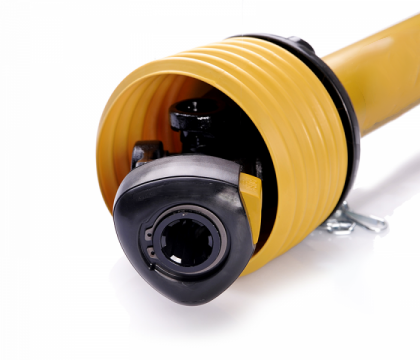
The Power Take-Off (PTO) shaft is one of the most critical components in the entire baling system. It serves as the mechanical link between the tractor's engine and the baler's internal drive system, transmitting rotational energy at a standardized speed of 540 RPM. Without a properly functioning PTO shaft, the baler's pickup, feeding system, baling chamber, and wrapping mechanism would all cease to operate. For the 9YO-1-25 Round Baler, the PTO shaft must be correctly sized and aligned to handle the torque loads generated during high-density compression — especially when processing tough materials like corn stalks.
A high-quality PTO shaft typically consists of a telescoping tube assembly, universal joints at each end, a safety shield, and a shear bolt or slip clutch overload protection device. The telescoping design allows the shaft to adjust in length as the tractor and baler move relative to each other during turns and across uneven terrain. The universal joints enable angular flexibility, while the overload protection prevents costly damage to the baler gearbox in the event of a sudden jam. For the best reliability and safety, we recommend sourcing PTO shafts from specialized manufacturers who produce components that meet international quality standards.
If you are looking for a reliable, high-quality PTO shaft for your round baler or other agricultural machinery, we recommend visiting tractorptoshafts.com — a professional supplier specializing in tractor PTO shafts, universal joints, and related driveline components for agricultural, industrial, and turf equipment applications. Their product range covers standard 540 and 1000 RPM PTO shafts in various spline configurations, including 1-3/8" 6-spline and 1-3/4" 20-spline formats, with options for slip clutch or shear bolt overload protection. Using a properly matched, high-grade PTO shaft from a trusted source like tractorptoshafts.com is essential to ensure safe, efficient operation and to protect your baler investment over the long term.
📊 Brand Comparison: How We Stack Up
* Specifications are based on publicly available data and may vary by region and model year. Contact each manufacturer for the most current details.
🌟 What Our Customers Say
★★★★★
Carlos M. — São Paulo, Brazil
Farm Size: 800 hectares | Crop: Corn & Soybean Residue
We purchased the 9YO-1-25 in early 2025 to handle corn stalk residue across our 800-hectare operation in the São Paulo interior. The Hammer Claw pickup was the main reason we chose this model — it lets us bale standing corn stalks without needing a separate shredder, which has saved us roughly two days of field work per cycle. Bale density has been consistent at around 160–180 kg/m³, which keeps our transport costs manageable. The net wrap system works well, though we had to fine-tune the tension settings during the first week. Our 75 HP New Holland tractor handles it without issue on flat terrain. The after-sales team responded quickly when we needed a replacement chain guide, and the part arrived within a week. Overall, it is a solid, functional machine at a fair price point.
★★★★☆
Sergei K. — Omsk Region, Russia
Farm Size: 1,200 hectares | Crop: Mixed Grass & Alfalfa Hay
I have been using John Deere round balers for many years, so I was cautious about switching. However, after testing the 9YO-1-25 on our alfalfa fields in the Omsk region for a full season, I can say it performs well within its price class. The roller-type chamber produces noticeably firmer bales than some belt-type machines I have tried, which is important because our bales sit in outdoor storage for extended periods during winter. The machine handled wet second-cut hay better than I expected, with minimal slippage in the chamber. One area for improvement would be the control panel — the bale size indicator is functional but basic compared to the digital monitors on more expensive brands. Parts availability has been acceptable so far, with our regional dealer stocking the most common wear items.
★★★★★
Batbayar D. — Arkhangai Province, Mongolia
Farm Size: 2,500 hectares (pasture) | Crop: Native Grassland Hay
We run cattle on open pasture in central Mongolia, and our hay baling window is short — usually only about three weeks in late August. The 9YO-1-25 has been reliable under these time-pressured conditions. We consistently produce 50 to 60 bales per hour with our 65 HP tractor, which is enough to build our winter stockpile on schedule. The machine adapts well to our uneven grassland terrain, and the pickup does not struggle with thin or sparse windrows, which is common on our native pasture. The build quality of the frame and rollers feels solid. Our only complaint is that the operation manual was initially only available in Chinese, though the distributor later provided an English version. We would recommend this baler to other herders in the region who need an affordable and dependable machine.
★★★★☆
James W. — Mato Grosso do Sul, Brazil
Farm Size: 450 hectares | Crop: Brachiaria Grass for Cattle Feed
We purchased the 9YO-1-25 as a replacement for an older belt-type baler that kept having issues with belt slippage during humid conditions. The roller-based chamber on this machine has been a clear improvement — we no longer lose time to belt adjustments in the middle of a run. The bale shape is consistently round and well-compacted, which makes stacking and transport straightforward. We pull it with a Massey Ferguson 275 at around 70 HP, and the power demand is manageable on our mostly flat terrain. One thing to note is that the hydraulic connections use metric fittings, so if your tractor has imperial connections, you will need adapters. The purchase price was significantly lower than the John Deere and New Holland alternatives we considered, and after one full season, I think the value proposition is strong.
★★★★★
Nursultan A. — Almaty Region, Kazakhstan
Farm Size: 1,800 hectares | Crop: Wheat Straw & Mixed Hay
We operate a mixed grain and livestock farm in southern Kazakhstan, and baling wheat straw after harvest is a key part of our operation. The 9YO-1-25 handles dry wheat straw without issues, producing tight bales that hold together well during handling and truck loading. We also use it on our hayfields, and the spring tooth pickup works efficiently across both crop types. The machine went through approximately 4,000 bales in its first season with only routine maintenance — chain lubrication, grease points, and one pickup tine replacement. Compared to some Russian-made alternatives we have used previously, the overall fit and finish of this machine is noticeably better. The price was reasonable for our budget, and the factory provided technical support via video call when we had questions during initial setup.
★★★★☆
Ricardo F. — Goiás, Brazil
Agricultural Cooperative Manager | Crop: Silage for Dairy Operations
Our cooperative acquired two units of the 9YO-1-25 for silage production to supply our member dairy farms in Goiás state. The roller-type compression system is well-suited for high-moisture silage, as it produces denser bales with better air exclusion than the belt-type machine we previously leased. After wrapping, fermentation quality has been good across batches. The automatic net wrap system saves time during high-volume runs — we typically process 200 to 250 bales per day with each unit. One unit required an adjustment to the tailgate hydraulic cylinder after about 1,500 bales, but the manufacturer's local representative resolved it within two days. For a cooperative managing costs across multiple farms, the lower acquisition and operating cost of this baler compared to premium imports makes a meaningful difference to our annual budget.
❓ Frequently Asked Questions
🏭 About Brazil Agricultural Balers Co., Ltd.
Brazil Agricultural Balers Co., Ltd. is a national high-tech enterprise specializing in the research, development, manufacturing, and distribution of agricultural baling machinery and related equipment. With a registered capital of 10 million RMB, our 32,000-square-meter production facility houses advanced manufacturing infrastructure including CNC laser cutting machines, automatic welding lines, and electrostatic spraying production lines — ensuring precision, consistency, and durability in every unit we produce. Our factory maintains two dedicated production lines for round balers and rakes, achieving an annual manufacturing capacity of 2,000 units for each product category.
Innovation is central to our operations. We operate an autonomous region-level R&D center and hold nearly 100 technical patents covering baler design, feeding systems, compression mechanisms, and related agricultural machinery technologies. Our engineering team fully adopts Computer-Aided Design (CAD) and 3D modeling throughout the product development process, enabling rapid prototyping and continuous improvement. Backed by a professional workforce of nearly 260 employees across 14 specialized departments, we maintain rigorous quality control at every stage of production.
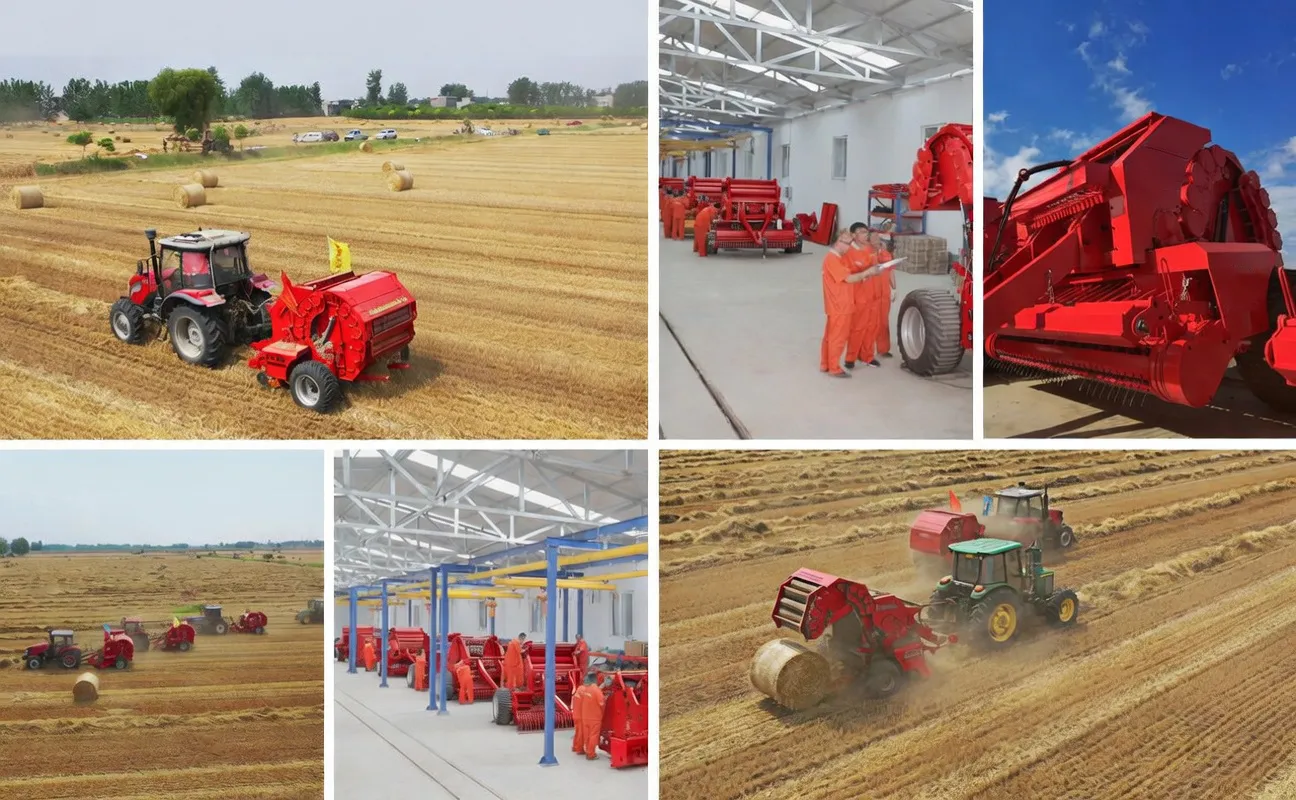
Our credibility and commitment to quality are underscored by industry-recognized certifications including ISO 9001 Quality Management System, Level A Integration of Informatization and Industrialization, and AAA Credit Enterprise rating. We hold independent import and export rights, enabling us to serve customers directly across international markets. Our products — marketed under trusted brands including Yingjia Meng, Yingjia, Jiujia, and FASCAR — have gained widespread recognition across Brazil's major agricultural regions, including São Paulo, Rio de Janeiro, Brasília, Salvador, and Manaus, as well as export markets in Russia, Mongolia, and Kazakhstan.
Our comprehensive product lineup includes round balers, square balers, single and double-blade mowers, disc rotary mowers, single and double-side rakes, and a full range of replacement parts and accessories. Whether you are a small-scale livestock farmer, a large commercial producer, or an agricultural equipment dealer, Brazil Agricultural Balers Co., Ltd. is committed to providing cost-effective, reliable machinery backed by responsive after-sales support, technical consultation, and timely spare parts delivery — so your operation stays productive throughout every season.